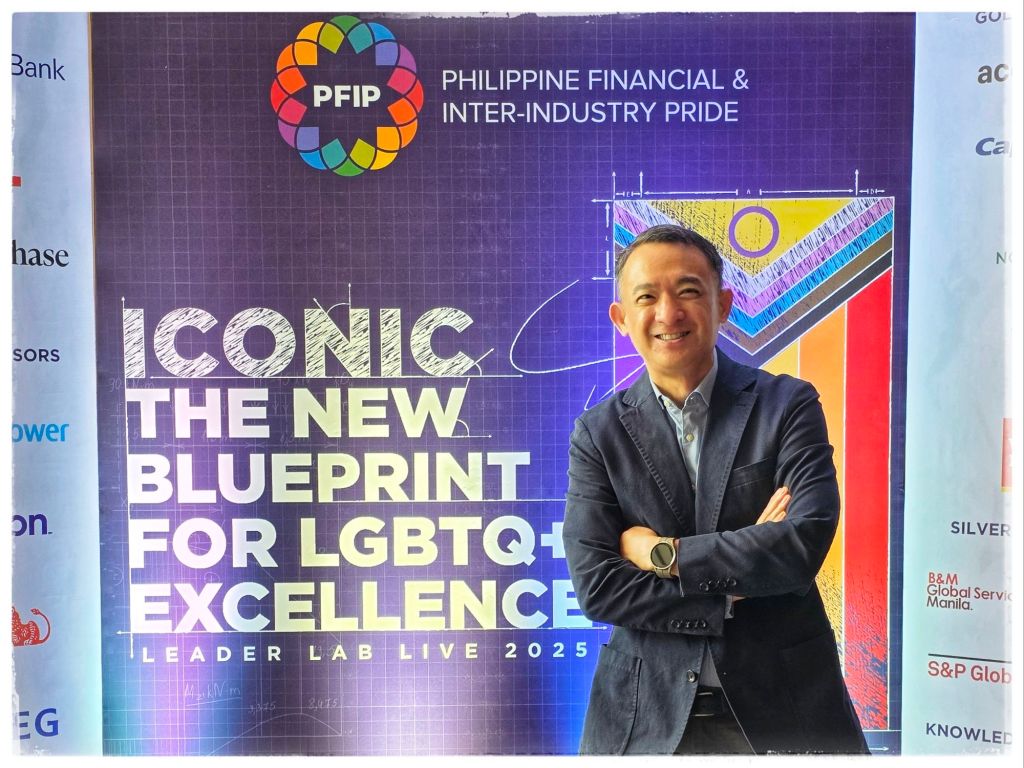
I’ll be retiring in four months when I turn 60. And this might be the last time I speak publicly about my LGBTQ+ journey while still in corporate life. I’m leaving with gratitude, no regrets, and a quiet sense of wonder.
Because this career—this life—I’ve lived? I never thought it would be possible. Not as a young gay man in the Philippines. Not in a male-dominated industry. And certainly not in a role so visibly out front.
Give Them No Reason to Stare
In my 20s, I nearly gave up. A promotion was dangled, but along with it came a question about my marital status. I took the hint. And I thought, maybe corporate life isn’t for someone like me. Maybe success required a version of myself I wasn’t sure I wanted to become.
There were no visible role models then. The examples I saw were men who married women or lived proudly abroad but stepped back into the closet the moment they flew home. The rest of us learned to survive quietly. We blended in, kept our heads down. I was told more than once, “I had no idea you were gay,” and I used to take that as a compliment. I thought it meant I was doing something right.
It took years to realize it also meant I was hiding. And that hiding has a cost.
Back then, the only model of survival was silence. Without social media or visible support systems, I leaned on weekend meetups with gay friends. That group became my sanctuary. We didn’t call it mental health, but that’s what it was. A space where I could just be.
So much of my early career was about negotiating how much of myself to show. How much was safe. How much was acceptable. Sometimes I wonder what kind of leader I would have been if I hadn’t spent so much energy trying to fit in. But would I have had the same opportunities if I stood out? I’ll never know. I just know that constant tradeoff takes its toll.
Step Into the Sun
Coming out changed everything.
Not all at once, and not without fear. But it gave me freedom. Shortly after I came out, I was asked to be the company spokesperson on a major public issue. I spoke on radio, on TV, even in Congress. I was nervous, but I wasn’t afraid. Not the way I used to be. There was nothing left to hide.
There was a time when just hearing the word bakla was enough to make me flinch. Now, even if someone did say it to mock me, I’d just say, “Yes.” And get back to business.
I didn’t push an agenda. I just lived. Openly. Quietly. Persistently. And in doing so, I showed that it was possible. To stay in this country. To love openly. To build a life that is functional, joyful, and whole.
Even in a macho space like engineering and operations—which I never imagined I’d be part of. I thought I’d stay in planning or finance. But today I lead operations. And I see change.
Young engineers, gay and lesbian staff, trans colleagues—posting about their partners, their joy, their lives. One even posted a photo of our pipes in Tondo quoting a Miss Universe line. And no one blinked.
Maybe it’s just the generation. Or maybe I helped.
Our policies haven’t caught up with global standards. No health coverage yet for same-sex partners. Still only the first child is covered. No gender-neutral restrooms. But the culture says: you belong.
One of our cadet engineers, a lesbian and valedictorian of her batch, left for another job. I didn’t stop her, just told her the culture might not be the same. A few months later she asked to return. Today, she’s a department head.
Sometimes change doesn’t begin with policy. It begins with presence.
You Will Be Found
I remember watching a young engineer deliver a presentation with flamboyance—almost like he was annotating a fashion show. My instinct was to coach him, tone it down. But I stopped myself. Because if I had said something, what he might have heard is: you can be gay, but not that gay. And that would’ve been wrong.
So I said nothing. And maybe the room stayed respectful because I was there. I’ll never know. But I’m glad I didn’t make him feel self-conscious.
That, too, is what being a role model looks like. Not always in what you say, but in what you choose not to say.
I don’t take myself too seriously. But I’ve come to accept that I am a role model for some people. It’s not the only role I carry, but it’s one I take to heart. Like being a partner, a son, a brother, an uncle, now a grand-uncle, a colleague, a mentor, and a friend.
To the next generation: your mold is enough. You don’t have to follow mine.
To the allies: speak up. Speak first.
And to anyone still wondering if there’s a place for them in corporate life, in leadership, in this country—there is.
I’ve lived to see it. And that, to me, is more than enough.
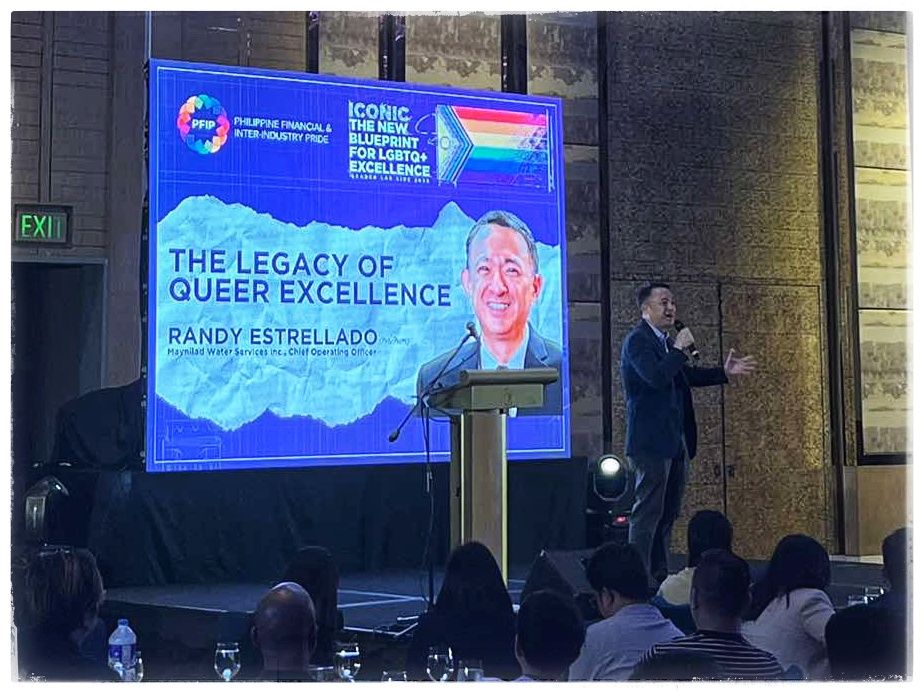
Adapted from a keynote speech delivered at a PFIP event in April 2025, on being LGBTQ+ in corporate life—what’s changed, what hasn’t, and what might still be possible.

 My Deep Fried Truth