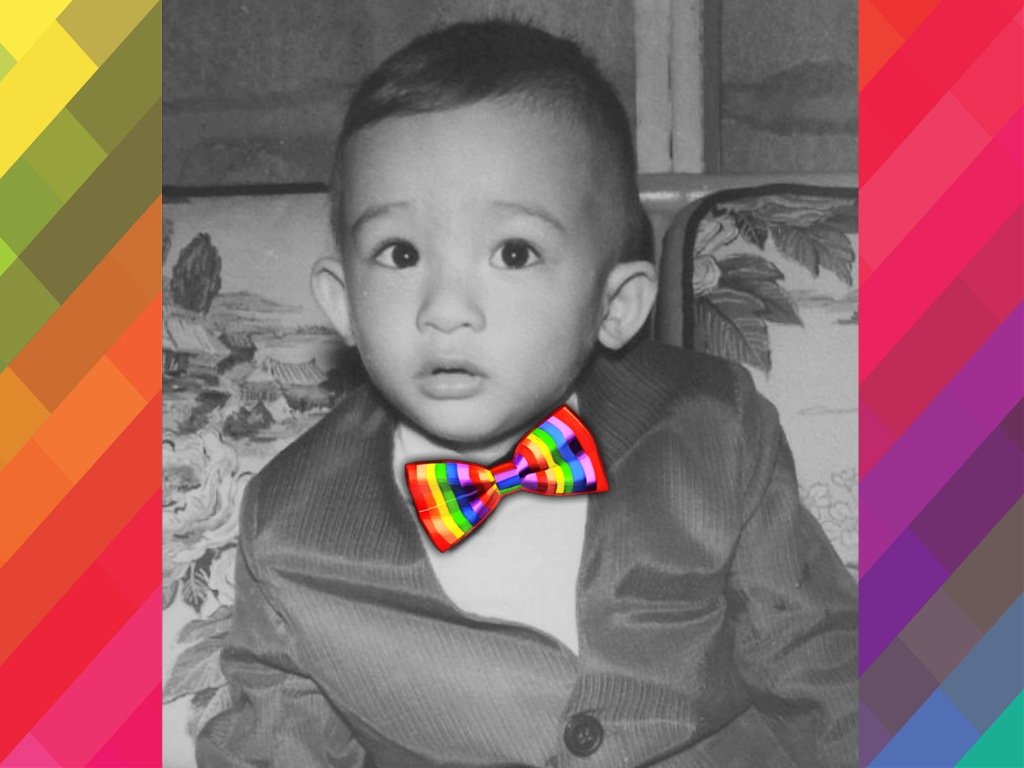
When I was already CFO of a publicly-listed company, my boss called me to his office for one of our rare chats about my performance and how he thought I could do better. I came with my pen and notebook prepared to take notes but not to hear what he had to say — “Kulang ka sa yabang” — “You are not arrogant enough.”
On one hand, as I would later tell my friends at work about the conversation, I thought it was another example of an unactionable advice from my CEO, whom we we would sometimes describe behind his back as someone out of touch with the common Filipino. After all, didn’t our culture look down on arrogance and prefer the humility of the quiet worker?
The other hand, I did not talk to anyone about, because I knew exactly what he meant. Years of being a gay man living inside the closet had taught me, perhaps too well, the art of being nice — harmless if not invisible. And that was not what he wanted from his CFO. He wanted someone more confrontational. Someone who welcomed conflict rather than avoided it. In his words – “may yabang.”
In my mind I rationalized that I was not that kind of person. That I was a part of the new generation that understood that we did not have to fight tooth and nail to find solutions to our problems. That we can always find common ground. But deep inside I knew that part of my desire to avoid conflict stemmed from the fear of a fight getting personal and getting called the dreaded word –“bakla.”
Haters Gonna Hate
“Bakla.” B-A-K-L-A. Five letters. Two syllables. But in Filipino it covers a multitude of meanings from the scientific but dry “homosexual” to the more everyday and friendlier “gay,” from “bi” which only gets it partly right to “trans” which doesn’t get it at all, and to how we all grew up hearing it being used — the pejorative “faggot.”
In 1994, there was an indie rock song “Multong Bakla” that somehow equated being gay to a scary ghoul, a disgusting fly, a spread-eagled cockroach, and a plague to society, among others. And yes it was a big hit that got massive airplay and brought the band that sang it into the mainstream. The song ends with the whole band joining the lead singer shout — “Bakla!” — and there was no doubt which of the word’s multitude of meanings they meant.
Hearing this song on the radio 26 years ago gave me no doubt what a gay man’s place was in Philippine society, let alone the corporate world. As most gay men of my era did, I kept quiet, gave an enigmatic smile, and played nice when asked why I didn’t have a girlfriend or why I wasn’t married. I was 29 years old, already a manager, but as a single man, it was not yet clear that there was room at the executive lounge for a “bakla” like me.
Why You Gotta Be So Mean
It seems like I should remember it better but I barely recall the first time I heard the word “bakla.” It must have been in a fight with a neighborhood kid just a year older than me when I was around 4 years old. A disagreement that ended with me taking back my toy and he responding with that word. While I did not know what it meant, that early I understood it was meant to hurt.
Growing up was a series of lessons on managing that hurt. I don’t remember going home after the fight to ask my parents what “bakla” meant. Turns out I didn’t need to because over time I would hear it often enough to know it was not something anyone would want to be. Definitely not in my father’s eyes.
“Huwag ka ngang ba-bakla-bakla” — “Don’t be a faggot.” I cannot count the number of times I heard my father say these words. He was a good person, a handsome and charming man admired by many. But like many a military man of his generation, he considered “bakla” the worst thing you could say about anyone.
I loved my father but I grew up afraid of him. “Para kang bakla” — “You’re acting like a faggot,” he would say. So around him I was always on my guard. He thought I was too soft. At times too proper. I recall Christmas gifts that I didn’t ask for and had to pretend to like — toy guns and boxing gloves — apparently intended to toughen me up.
On a road trip to his home province, I heard him complain to my mother that like a “bakla” I talked too much. I fought back tears and pretended to nod off in the car, doubly hurt as I was only making conversation so he wouldn’t fall asleep on the long drive home. Pretty soon I learned to stop the tears from falling even without closing my eyes.
Sticks and Stones
I know my father meant well, and whether what he did was bullying or not, it did give me the skills to cope with bullying, mostly by learning how to avoid it in the first place. At home that meant trying to reduce interacting with him, burying myself in books, sometimes even feigning sickness to get away from attending events with the family.
This technique was harder to do in school. I was and still am a lousy athlete who can’t dribble a ball to save my life so I dreaded P.E. classes the most. It was 60 minutes of torture for me but it was also 60 minutes of forced interaction with possible bullies that taught me how to react to them — you don’t.
Apparently bullies don’t enjoy it when you don’t allow them to get to you. Or if you’re able to laugh it away. Eventually I learned to read bullies and calibrate the appropriate response. Fortunately I also did not have the body type that drew bullies in — neither too fat nor too thin, neither too short nor too tall — and because my father had drilled out my more effeminate traits, nothing there to target.
All this avoidance did not come without a cost. I do not have close friends from my childhood or from the neighborhood I grew up in. And while I eventually became a person my father could be proud of, he did not know what I went through to get there — the fears and insecurities I overcame, the risks and sacrifices I took. We did not have that kind of relationship. Years of hiding did that and he unfortunately passed away before I grew the courage to let him know the real me.
Let Your Colors Burst
I know it’s an imperfect world and it’s sometimes hard to see if we’re changing for the better. But only 17 years after the song “Multong Bakla” played on the radio, the straight rapper Gloc-9 came out with “Sirena,” a song sympathetic to the gay struggle for dignity. “Kahit anong gawin nila, bandera ko’y di tutumba” — “No matter what they do, my flag will keep on flying.”
I no longer have the same boss, and have been out at work for the last 7 years. I’m not sure it has made me actively seek out conflict, but I’m sure it is no longer something I am afraid of. I don’t necessarily encourage conflict, but knowing the pitfalls of avoiding unpleasant conversation, I make sure the environment is open and safe to express one’s views.
“Bakla ako” — “I’m gay.” After decades of fearing it, I no longer flinch when I hear the word “bakla.” I know it carries the stigma of generations but what can I do other than own it when it’s the only Filipino word for it. Unless we use gay lingo which is another story.
(On a side note, I object to gay men putting down people they don’t like, particularly politicians they disagree with, by calling them “bakla.” I think it’s internalized homophobia though my friends who I’ve called on this insist it’s just for fun.)
I’m not a political person and I have yet to walk my first Pride March. My work and the difficulty of separating my personal and professional personas prevents me from taking a more public role. But I am grateful to everyone who has come before me, in the Philippines and around the world, that have allowed me and other LBGTQ individuals to be the persons we can be today.
So I celebrate Pride and make sure I am counted. Discriminating against anyone deprives us of the fullness and beauty of human life. Lives and relationships we cannot recover and should not be able to afford to lose. We are all worthy people of every color of the rainbow.

 My Deep Fried Truth
I Feel For u and what u have gone thru. My late elder Brother was, I suspect Gay but hid it all his Life feeling ridicule and General non-acceptance, he was afraid he would lose his authority over us and respect. I regret not having come To terms with him about this before he left- To tell him, gender did not matter at all and that we love and respect him truly as our kuya. In a homily in a mass we celebrated for a friend who passed: ‘it is not what we accomplished in Life that matters, it is what God has accomplished in us’. God has done wonders with u, I salute, admire u whoever u are, cheers!
LikeLiked by 1 person